As Iraq loosens the taps, slow planning for a spill

With oil production set to boom, Iraq is facing an increasing risk of oil-related disaster, and environmental officials say the country isn’t ready to handle a major spill.
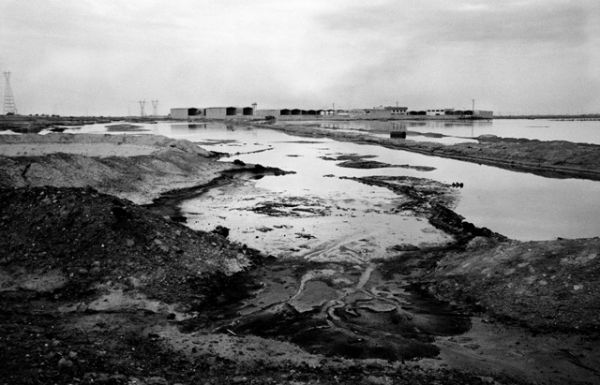
A large oil spillage in southern Iraq during the American-led invasion of the country, March 2003. (TOM STODDART/Getty Images)

BAGHDAD - Iraq is ill-prepared to handle environmental disasters associated with the country’s expanding oil industry, particularly in the likelihood of an offshore oil spill, according to Iraq’s Environment Ministry and neighboring oil officials.

With the oil spill in the Gulf of Mexico dominating U.S. and international headlines, the deputy environment minister said that now is an ideal time not only to address Iraq’s own offshore spill preparedness but also to conduct a wide-ranging review of the oil sector as it relates to the environment.

Oil production is scheduled to increase from a capacity of 2.6 million barrels per day (bpd) to more than 12.5 million bpd within seven years on the backs of 11 oil contracts with foreign oil firms, most operating in the south. But Iraq’s aging pipeline network and other infrastructure will need major upgrades and expansion after decades of wars and sanctions, including the southern export pipelines.

Iraqi and American oil officials say those pipelines, which send 80 percent of Iraq’s total oil exports to the global market by way of the Faw Peninsula and then into the Northern Arabian Gulf to the al-Basra and Khor al-Amaya oil terminals, can’t handle more than 1.6 million bpd without risk of rupture.

Such a scenario would shut-in 75 percent of the state’s income while creating environmental havoc for Iraqis and their neighbors.

“We don’t have the capacity to deal with that amount of potential pollutant (in the event of a spill) if Iraq is producing that much oil,” said Deputy Environmental Minister Kamal Latif.

The decaying oil infrastructure, said Latif, is a major cause for concern for his ministry, which has made numerous suggestions to Iraqi oil officials for improving safety and reducing the risk of onshore and offshore spills.

Both the ministries of environment and water have been actively engaged with the oil ministry on repairing the past environmental harm caused by the oil sector as well as preparing new regulation and enforcement to head off potential problems as the country and its foreign partners prepare for the biggest oil boom in history. New infrastructure that can handle such an oil flow is a priority as well.

The Ministry of Environment is also pushing for Iraq’s return to active participation in the Marine Emergency Mutual Aid Center (MEMAC), a Gulf countries environmental protection group.

But the Oil Ministry and central government have shown little interest in adopting Environmental Ministry suggestions, Latif said, as both focus their efforts on trying to bolster production and encourage additional foreign investors to the sector. Iraq is in need of massive reconstruction of all economic and social sectors, and with oil sales providing the state’s only cash flow, there is a vacuum of competition for the funds.

“The environmental issue is just not a top priority (in the Iraqi government),” said Latif.

In a sign of headway, Iraqi lawmakers voted late last year to rejoin the ranks of both MEMAC and the Regional Organization for the Protection of the Marine Environment (ROPME), two of the leading Middle East marine protection groups, whose members include Bahrain, Iran, Iraq, Kuwait, Oman, Qatar, Saudi Arabia and UAE.

Iraq had long been a part of both organizations, but let its memberships lapse following the first Gulf War. Latif said Iraq owes MEMAC upwards of $16 million in dues dating back to 1991.

MEMAC official Abdulmajeed Bulushi said that the only point of contact the organization had with the Iraqi government was with Narmeen Othman, the minister of environment, and there has been no Iraqi representative at MEMAC headquarters in Bahrain for several years.

“Iraq is represented as a desk, flag and empty chair,” said Bulushi, frustrated with Baghdad’s involvement in MEMAC initiatives, which include drafting emergency spill plans that would allocate resources to a cleanup effort regardless of which Gulf country is the culprit.

Iraq currently has no offshore oil drilling, but tankers leaving the Basra port filled up an average of 1.44 million bpd in June, a decrease caused by rough weather, another factor that puts the region’s waters at risk.

“MEMAC could really help Iraq improve its preparedness for offshore spills,” said Latif, noting his ministry’s agenda to encourage lawmakers to resume active participation in MEMAC once the new government is formed.

Iraq Oil Report is told Iraqi officials were to attend a recent MEMAC tabletop exercise of an oil spill response, but were delayed because of sandstorms. The exercise is a prelude to a response simulation staged at sea.

Environment and water officials will also be pushing state-run and foreign oil companies to improve their preparedness for potential onshore oil spills. They discussed initiatives in a symposium held by the oil ministry last week in Baghdad with foreign oil companies.

Latif said that his ministry was working with environmental advisers at the U.S. Embassy in Iraq to craft a law that would create environmental compliance standards for foreign oil companies operating in Iraq, based on existing international and American regulations.

The Iraqi government would also be subject to new environmental regulations, said the deputy environment minister, noting that Iraq’s recent history has not been environmentally friendly.

“In 1991, we caused a lot of problems,” he said, referring to Saddam Hussein’s orders to ignite Kuwaiti oil fields, burning tens of millions of barrels.

Related Stories

  • Print
  • RSS
  • -
  • +
  • Closed

0 Response to “As Iraq loosens the taps, slow planning for a spill”


Comments are currently closed.