Update and Perspectives on the Status Of Forces Agreement
Plus:
*SOFA negotiations rocky but developing
*Iraq Oil Report offers first look at text submitted to Parliament
*Kurdistan-Baghdad relations rocky
*KRG signs U.N. electricity help
*Iraq Oil Ministry wants helicopters
*Alive in Baghdad: Sahwa, What Next After Al-Qaeda?
*Iraq Press Roundup
The Status Of Forces Agreement, or SOFA, is nearing a late-November deadline when Iraq’s Parliament is to recess, and the end-December deadline when the current U.N. mandate is to expire.
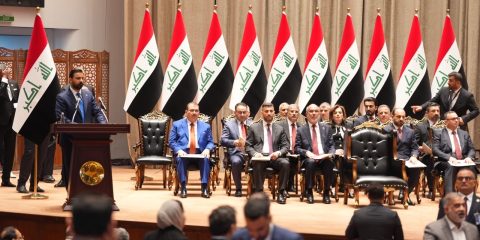
Iraq Oil Report broke the text Tuesday, and Parliament’s first attempt to debate it didn’t go too well, as Campbell Robertson and Suadad al-Salhy report for The New York Times “boiled over into shouting and physical confrontation.”
Leila Fadel of McClatchy Newspapers offers her must-read
analysis of the agreement.
For more perspectives: Tina Susman for the Los Angeles Times and Charles Levinson for USA Today
Prime Minister Nouri al-Maliki is pressing Parliament to approve the SOFA Adam Ashton reports for McClatchy Newspapers.
White House Spokesperson Dana Perino said the Iraqi cabinet approval a reason “to celebrate the victory that we’ve had so far.”
Michael Abramowitz reports in The Washington Post the Bush reversal on ‘no timeline, no way’ gives an Obama administration some leeway in any U.S. withdrawal agenda. The end-2011 deadline would require a near immediate action for withdrawal, as Washington Post’s Ann Scott Tyson reports Joint Chiefs of Staff Chairman Admiral Michael Mullen says it would take two to three years.
Iraq’s Sunni Parliamentarian leadership wants a referendum on the pact Democracy Now reports. And the pact could lead to violence, UPI reports.
The New York Times reporters Anwar J. Ali and Campbell Robertson see an alarming trend of increasing violence and belief it comes from U.S. pressure on the Status Of Forces Agreement.
Ali Baban, Iraq’s Minister of Planning and Development Cooperation, discusses the Iraqi economy and the likely effects upon it of the Obama administration and the signing of the U.S-Iraqi security pact, with Sa’ad Salloum of Niqash.
Prime Minister Nouri al-Maliki’s coalition is becoming more fragile as the Kurdish Coalition appears ready to walk over a number of issues. PUK Media reports a major new roadblock is the central government’s attempt to set up so-called “supporting councils,” whose scope and purpose is not totally clear. As Iraq Oil Report told you earlier, a Nov. 15 meeting between central and regional leadership aimed at settling issues over oil and non-oil related disputes stalled on this and other issues, including proposed amendments to the Constitution.
The Financial Times’ Anna Fifield has a great tale of the power struggle over the northern oil capital Kirkuk and Kurdish-Arab relations.
The International Crisis Group’s ongoing analysis of the conflict between Iraq’s Kurds, Arabs and their neighbors to the north is available here: Turkey and Iraqi Kurds: Conflict or Cooperation?
Iraq Oil Ministry’s Oil Drilling Co. is in the market for two helicopters, The Associated Press reports.
Here’s the actual tender document.
The KRG’s Ministry of Electricity brought the U.N. Development Program in on supervising nearly $6.5 million in electricity projects, Voices of Iraq reports.
Alive in Baghdad: Sahwa, What Next After Al-Qaeda?
The Sahwa Councils or what are also known as “Sahwa Forces” had a strong impact and important role in bringing stability to some areas of Iraq such as Anbar province, Ramadi, Fallujah, and some other areas in Baghdad. Those forces were created after Sattar Abu Risha suggested the idea of creating local forces recruited within the same area the forces will be responsible for. However, some Sahwa Forces succeeded in protecting their areas while others did not. There have been some rumors spread about cooperation between the Sahwa forces and Al-Qaeda, in some areas of Baghdad. Some Iraqis began to be afraid of the Sahwa Forces due to some accidents happening in Baghdad such as kidnappings and robbery under the Sahwa protection.
A U.S.- and British-based equity firm is overseeing the payroll of moderate Iraqi imams counseling prisoners in Iraq, Nick Mottern and Bill Rau write for Truthout.org.
The U.N. Special Envoy to Iraq has praised Iraqi Parliament’s approval of a Human Rights Commission, UPI reports. The text of the legislation, which must be approved by the Presidency Council before it becomes law, was first published Tuesday on Iraq Oil Report.
Read what Iraqis read: the Iraq Press Roundup by UPI’s Alaa Majeed.
THURSDAY’S IRAQ OIL REPORT: Developments in the struggle to control the oil capital of Basra.
–


It will be interesting to see the treatment of Western contractors under Iraqi legal jurisdiction which varies from town to town and tribe to tribe. Possible jail time for unwittingly violating Ramadan fasting by sipping water in public? Western contractors prepare to be subject to unlimited search and detention by local governments (tribal leaders) for the vaguest of suspicions. Oh, and those Miranda rights, right to a phone call, prohibitions against cruel and unusual punishment? With all due respect for Iraqi tradition and customs, they do not agree entirely with the U.S. concepts contained in its Constitution and Bill of Rights.
Leave your response!