Iraqi oil: Deal or no deal?

“The United States was not involved in any decisions to award contracts, to make determinations of what kinds of contracts would be offered, to provide advice over what kinds of contracts would be offered. These are technical experts that we have working in the Iraqi Oil Ministry, who are similar to the technical experts we have working in many ministries throughout the government. Saying that they are somehow responsible for this matter, would be equivalent to saying that the person who does your taxes is responsible for how much income you earned. It’s simply not true,” said U.S. State Department deputy spokesperson Tom Casey.

Frustrated Iraqis trying to tank up their cars faced miles-long gas lines on Tuesday — a stark reminder that a country with one of the world’s largest oil reserves still has major challenges delivering fuel to its people, writes Sebastian Abbot for the Associated Press.

The lines followed Iraq’s announcement Monday that it was opening six major oil fields and two natural gas fields to development by foreign firms, which could lead to the biggest outside stake in Iraq’s oil industry since it was nationalized more than 30 years ago.

Iraq said that it had failed to sign technical support deals with global oil majors hoping to cash in on boosting the war-torn country’s extensive but underexploited oilfields, Agence France Presse said.

Iraq is still negotiating with Shell, BP, ExxonMobil, Chevron and Total, and a consortium of other smaller oil companies, to develop six oil blocks and two gas fields, Oil Minister Hussein al-Shahristani told a press briefing.

“We did not finalise any agreement with them because they refused to offer consultancy based on fees as they wanted a share of the oil,” he said.

Iraq’s government invited foreign firms to help boost the production of the country’s major oil fields, beginning a global competition for access to the world’s third-largest reserves, Sudarsan Raghavan and Steven Mufson write for The Washington Post.

Iraqi Oil Minister Hussain al-Shahristani said the government would seek to tap Western technology and capital to increase Iraqi oil production by about 60 percent, or approximately 1.5 million barrels a day, swelling Iraqi oil revenue and potentially easing tight petroleum markets where prices have doubled in the past year.

Shahristani said 35 companies — including firms from the United States, Britain, France, Russia, China and India — had been selected to bid on long-term contracts to provide services, equipment, training and advice on the country’s biggest oil fields, which have suffered from age, technological neglect and mismanagement during years of war and economic sanctions.

“The six oil fields that have been announced today are the backbone of Iraq’s oil production, and some of them are getting old and production is declining,” Shahristani told reporters.

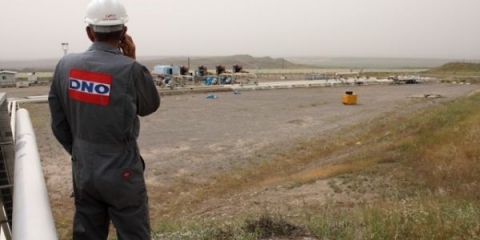
Norway’s DNO International, the first foreign firm to drill for oil in Iraq after the U.S.-led invasion in 2003, said on Tuesday it was not pursuing any of the oil projects offered by Baghdad, Reuters reports.

DNO, which is producing oil in Iraq’s Kurdish region in the north, was not on a list of pre-qualified bidders for projects in other areas of Iraq published on Monday.

On Tuesday, some Norwegian media suggested that may mean DNO was no longer welcome in Iraq, DNO said in a statement. Shares in DNO were down 5 percent at 10.10 crowns at 1106 GMT.

An epic struggle for access to the world’s third-largest oil reserves is under way in Iraq, underscoring, and at times exacerbating, the sectarian violence gripping much of the country.

At stake is the development of 115 billion barrels of proved oil reserves and 112 trillion cubic feet of gas, as well as access to numerous exploration prospects by international oil companies that increasingly are being shut out of the world’s most prospective hydrocarbon provinces amid a rising tide of resource nationalism, Tamsin Carlisle writes in The National.

The Iraqi government is to establish a new oil company with a proposed capital of more than $7.9 million and converting Maysan oil fields into a public company and disassociating it from the South Oil CompanySouth Oil Company

In a statement to KUNA, Iraqi Oil Minister Hussein Al-Shahrastani said that the cabinet approved the establishment of the oil company in the governorate of Maysan under the name (Maysan Oil Company).

“It would be tasked to develop the fields and production in the province,” Al-Shahrastani said, noting that the Oil MinistryOil Ministry Loading… had submitted a proposal to the cabinet on that regard, which received government blessing.

The Kurdistan Regional Government of Iraq announced the publication of a fact-finding report by the internationally renowned expert on petroleum fiscal regimes, Dr Pedro van Meurs, which finds that the Production Sharing Contract model currently applied by the KRG (KRG-PSCs) is immensely better for Iraq’s national interests than the Risk Service Contracts (EDP-RSCs) that have been proposed by the Ministry of Oil (MOO) in Baghdad.

In his report ‘Comparative analysis of Ministry of Oil and Kurdistan fiscal terms as applied to the Kurdistan Region’, prepared for leading international law firm Clifford Chance at the request of the KRG, Dr. van Meurs warns, “If profitability to the investors is not aligned with the goals of the government, very significant losses can occur to the value of government revenues.”

##

2 Responses to “Iraqi oil: Deal or no deal?”


  1. 1 Dr. Al-Khayat

    De Muers report to the KRG is an excercice in spin ; how can he compare the KRG Production Sharing Contracts , the details of which are available , with the Proposed long term Service Contracts the Ministry of Oil is formulating and no details about their terms are Known yet ????

  2. 2 Levi Zev

    What happened to Ben Lando? Who is Dan Graeber?

Leave a Reply